

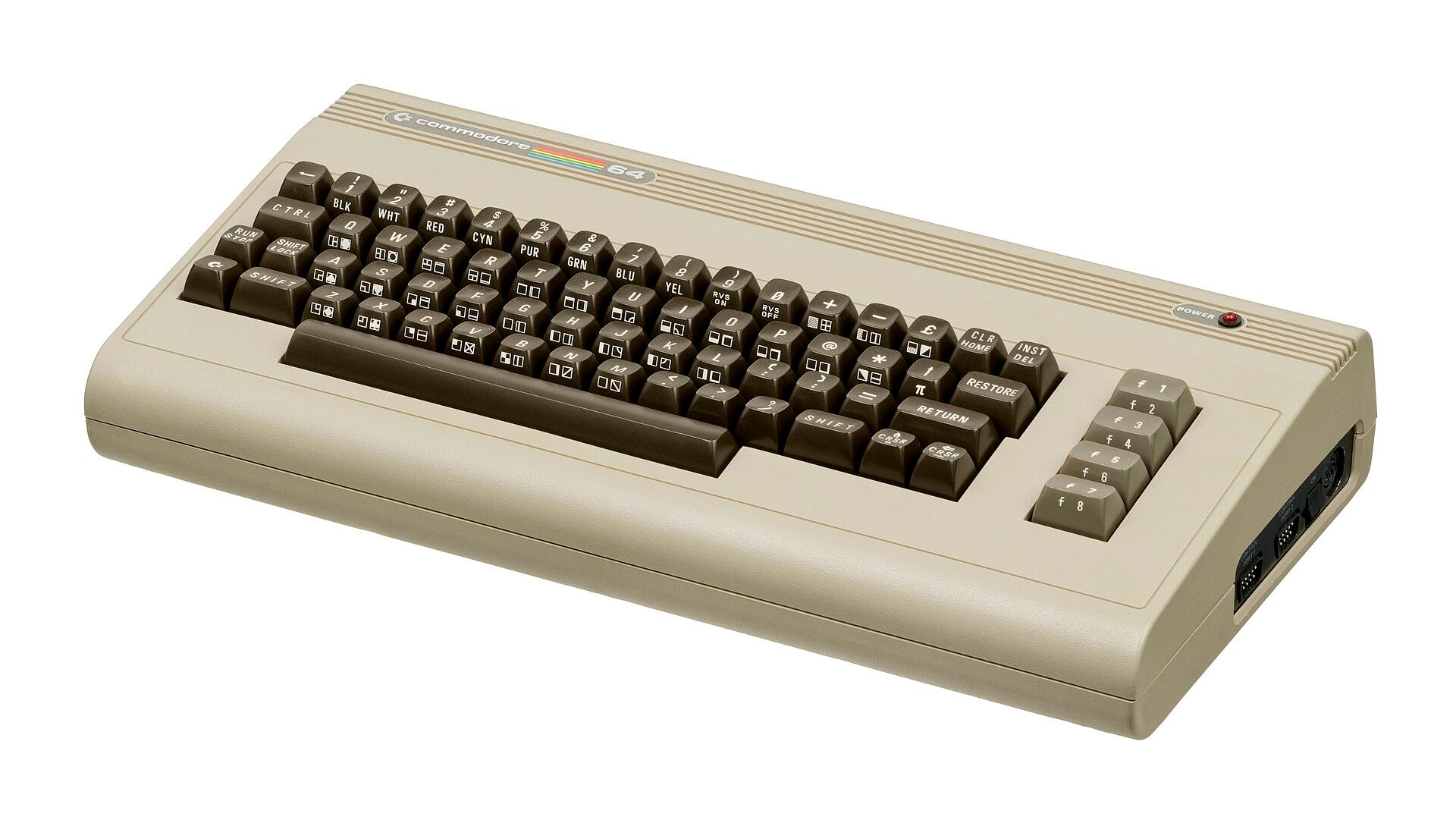
A Commodore 64, an 8-bit home computer introduced in 1982 by Commodore International. Its low retail price and easy availability led to the system becoming the market leader for three years. It remains the best-selling single personal computer model. Image by Evan-Amos, Public Domain via Wikimedia Commons.
In previous LifeBits articles, I’ve written about my experiences with early computers accessed through teletypes and punch card machines, and also about my first computer — a Commodore VIC-20 that I owned for exactly one week. That VIC-20 was replaced with a Commodore 64 when I found out the price on the latter had dropped to the price that I had paid for the VIC-20, and I was able to convince the manager at the K-Mart store to let me return the VIC-20 and get the much more capable Commodore 64. That, of course, is the topic of today’s LifeBits.
The C64 holds a special place in the hearts of many of us who were dipping our toes into the waters of personal computing in the early 1980s. This 8-bit computer first hit the market in 1982 for $595 after being introduced at the 1982 Consumer Electronics Show, and to say that it was popular is an understatement. While there isn’t a definitive count on how many C64s were sold, it’s estimated that at least 12.5 million of the beige boxes made it into the homes of the computer-curious.
As I mentioned in my article about the VIC-20, I had separately purchased an Amdek Color 1 monitor for that computer and that’s what I ended up using with the C64. I also still had the cassette tape drive (Datasette 1530) to save and load programs I was writing.
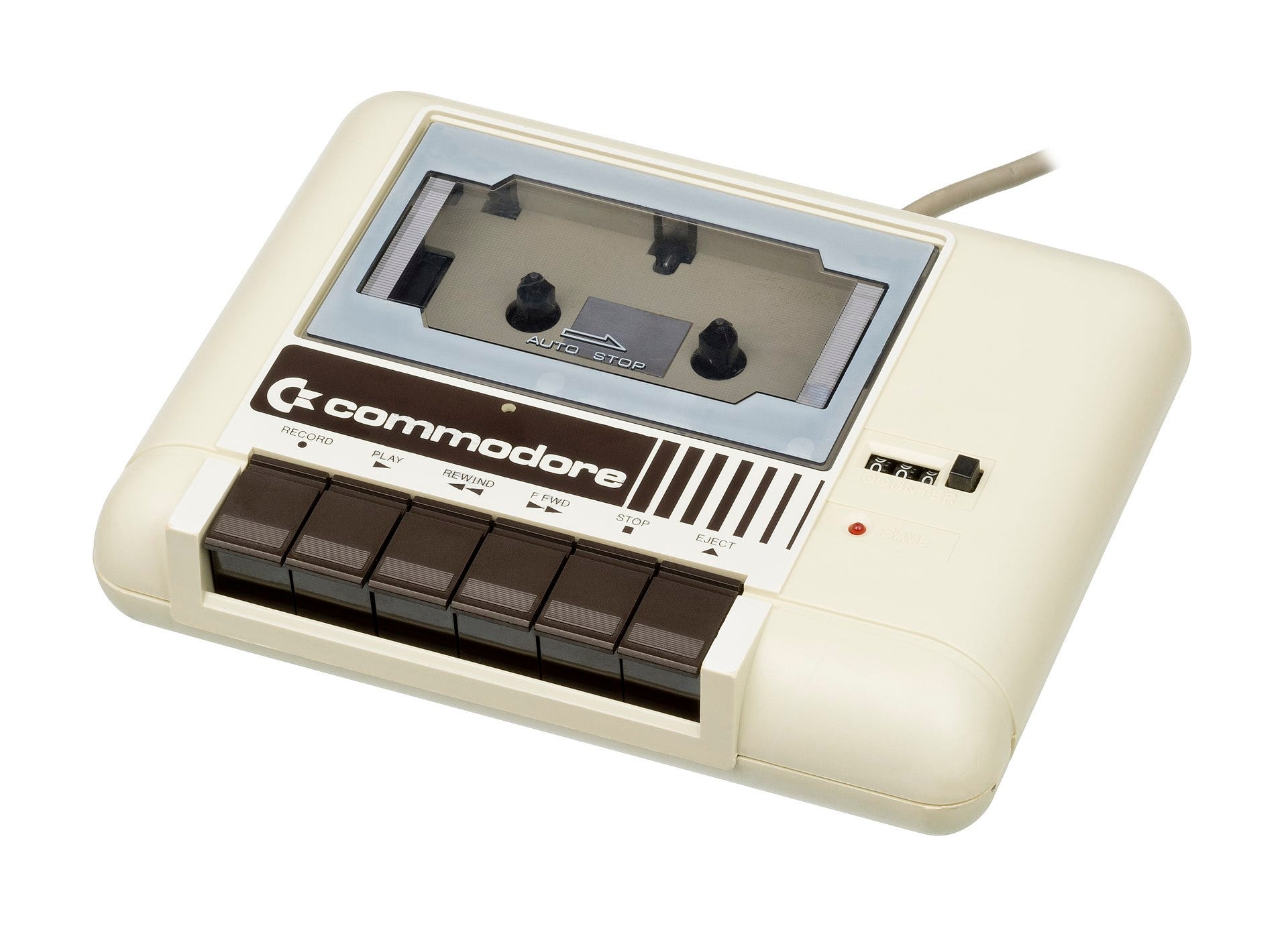
Commodore Datasette 1530 tape drive, Image by Evan-Amos, Public Domain via Wikimedia Commons.
Well, I hated that tape drive almost immediately. Maybe it was just me, but it never seemed to work properly. For one thing, it was always annoying to have to use the mechanical tape counter (a three-digit counter that showed the approximate “distance” you had gone on the cassette) to figure out where you had stored a specific program, then use the fast-forward, stop, rewind, and play buttons to try to get to the beginning of a program file.
The next step was typing “LOAD” into the computer, at which point it would prompt me to “PRESS PLAY ON TAPE #1”. The cassette drive would whir, the computer would display “SEARCHING”, and if I was lucky, it would find the program and actually load it.
Now the way this tape drive worked was that it recorded and “played back” analog tones, somewhat similar to the way modems worked. The 1530 had an analog-to-digital converter built in that turned these tones into digital data that the computer understood, and that converter also worked in the other direction, converting programs that had been typed into the computer into tones that could be recorded on tape.
I’d say I was probably successful in loading a saved program from tape about half the time, and the process was slow. The 1530’s data capacity was about 100 kilobytes per 30 minute tape, and the data was read or written at about 50 bytes per second.
After getting irritated by the 1530 for a few months, I decided to buy a disk drive. The Commodore 1541 floppy disk drive was actually more expensive than the computer itself when I bought it, but I felt as if I had really moved into the “big times” by being able to easily (and relatively quickly) read and write files to this noisy drive.
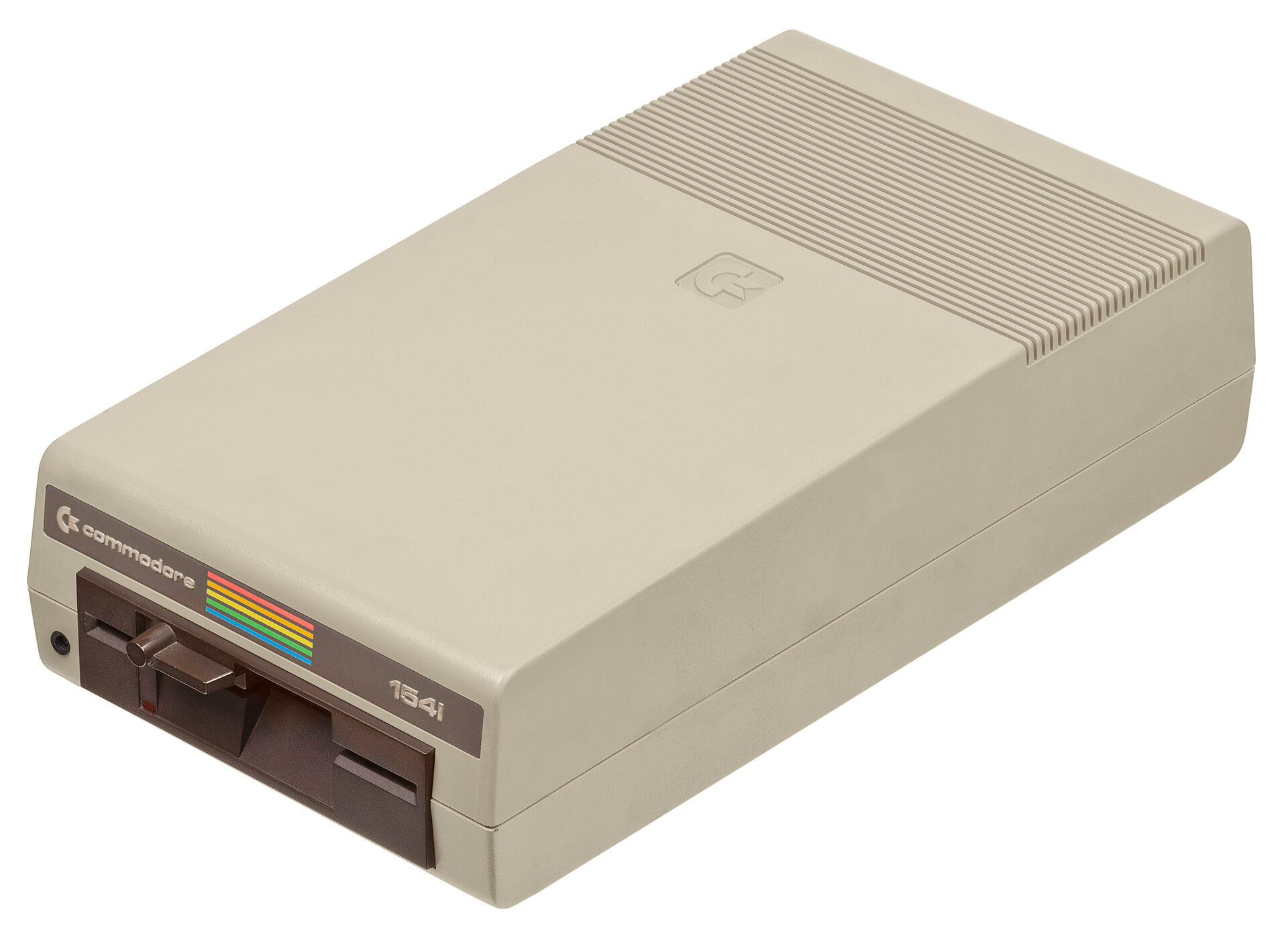
Commodore Datasette 1530 tape drive, Image by Evan-Amos, Public Domain via Wikimedia Commons.
With that nifty piece of hardware in my ever-growing collection of stuff in the “computer room” (AKA “the study” in one of the three bedrooms in our house), I felt like I was really going somewhere! With copies of the latest C64 magazines in hand, I’d sit down and laboriously type in the programs, then save them to a diskette… only to have to usually re-type some of the lines because I’d fat-fingered some of the commands and the program would crash.
That got old pretty darned quick. I decided that it would be a much better idea to download full programs from bulletin board systems (BBS). I described my experiences with BBSs (including being the system operator — sysop — for one for many years) in this LifeBits post.
That required a modem to dial up to the available BBSs, which in this case was a speedy (300 baud!) Commodore 1650 AUTOMODEM.
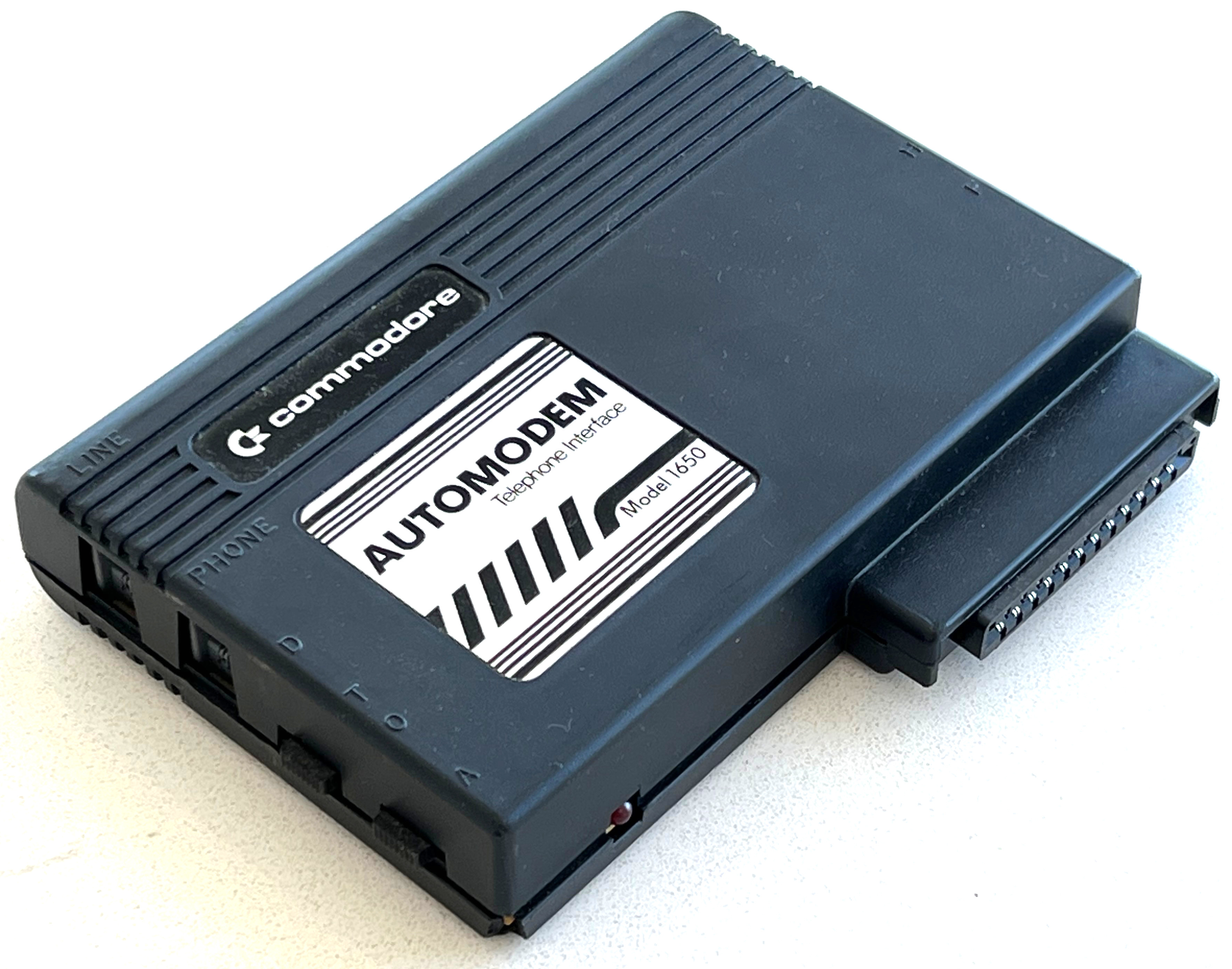
The amazing Commodore Model 1650 Automodem: Image from pagetable.com.
So, what did I actually do with my C64 other than type in programs, find new bulletin board systems to call, and play the occasional game (confession — I’m not much of a gamer)? I wrote some BASIC programs and I began to write.
The programming was actually quite fun. I wrote a very basic (no pun intended) flat file database management program that I used to catalog the videocassettes we owned (VHS for the win!), the books we had in our library, and so on. At one point I even thought about selling that program… but I never got the nerve to do so. I also wrote some very simple games using the sprite programming feature and the sound capabilities of the C64. They basically sucked compared to what was available on diskette, cartridge, or tape at that point, so my games were just an exercise to see what I could do (not much).
By this point in my life I had been working in the real world for four years, and two things I found I had a talent for were writing and explaining things to other people. I had written papers in college that were well-received by professors, so I started thinking about writing computer how-to books. I had a printer by this point (an Epson FX-80 dot matrix printer), mainly used to print out lists from the database manager:
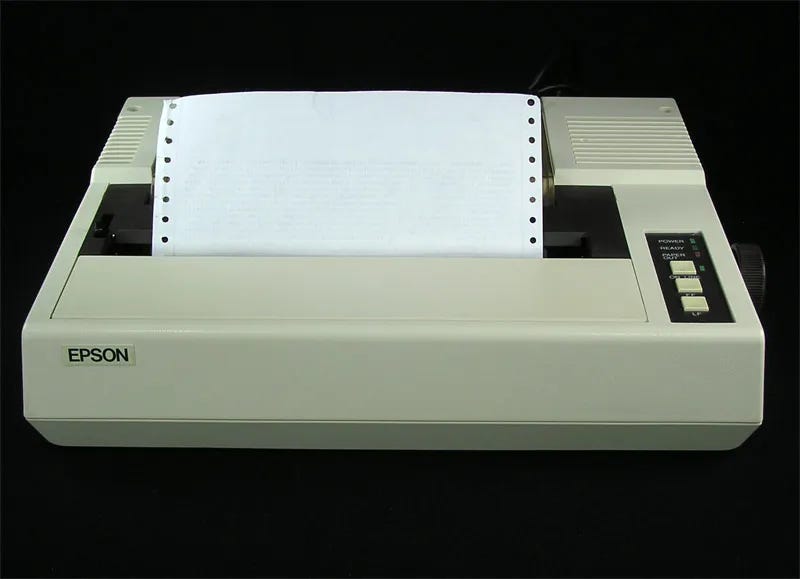
Epson FX-80 80-column dot matrix printer.
Hey, I could use that to print out proof copies of any books I wrote! Only one problem… I needed something that would let me write and edit my text. For the C64, there were a few word processing programs, including one called SpeedScript that you could type into your machine from Compute‘s! Gazette magazine. By this point, I really didn’t want to type yet another program that was printed in really small type (and probably with some typos…) into my C64, so I opted to buy the rather expensive Easy Script. This word processor was marketed by Commodore and widely available at just about any store where you could buy a C64 or VIC-20.
There’s a wonderful review and “user guide” for Easy Script that was written by Nigel Ruth and printed in Commodore User Magazine in October 1983. A Commodore fan by the name of Ilker Fiçicilar from Türkiye reproduced that review on his website and I include a link here.
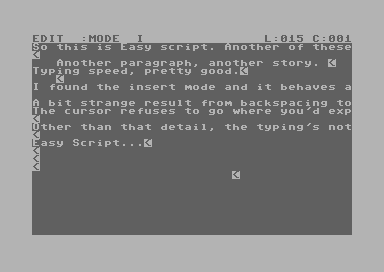
How Easy Script appeared on the C64 display (you could change colors…) Image from http://oldmachinery.blogspot.com/2016/06/round-up-commodore-64-text-editors-and.html
So, I had a word processing programs, I had a computer, I had a disk drive, I had a printer, I had a modem… sounds like it was time to get to work!
Well, I quickly found the limitations of Easy Script and the C64 when it came to doing word processing. This wasn’t exactly WYSIWYG (What You See Is What You Get) as we’d know it in the future. The C64 could only display about 40 columns of text, so I’d type in text in a pretty much free-form format, apply the limited formatting tools that were available in Easy Script, save my writing to disk (by the way, the C64 could only hold about six pages of typed text at a time…), and then print out my sample to see how it looked.
Not good. I realized if I was to do any “professional writing,” I was going to need something that could let me display a full 80 columns of text and run a “real” word processing program. At that point, a handful of IBM “clone” DOS computers were just starting to come onto the market and there was also the very popular Apple II, but they all seemed out of my price range. I was visiting a computer store in late 1983 when I saw two things that would shape my future for another year — a rather low-priced DOS-compatible computer and the wildly popular WordStar word processing program.
Like many of the probably hundred or so computers I’ve owned in my life, the C64 and many of its peripherals would soon be advertised for sale as I’d move even further into the world of personal computing. And with that cliffhanger, I leave you for the time being.
Postscript: The Commodore 64 Lives Again!
Any article about the Commodore 64 would not be complete without mentioning that this venerable best-seller has been revived. I really don’t want a C64, so I’m not going to get on the Commodore 64 Ultimate bandwagon. But for anyone who either wants a retro trip back to the days of the original C64 or has a stash of C64 programs or cartridges (yes, the C64 had a cartridge slot…), it’s available in one of two models for $299.99: the ‘Breadbin’ Commodore 64 Ultimate BASIC Beige or the Slimline Commodore 64C Ultimate BASIC Beige.
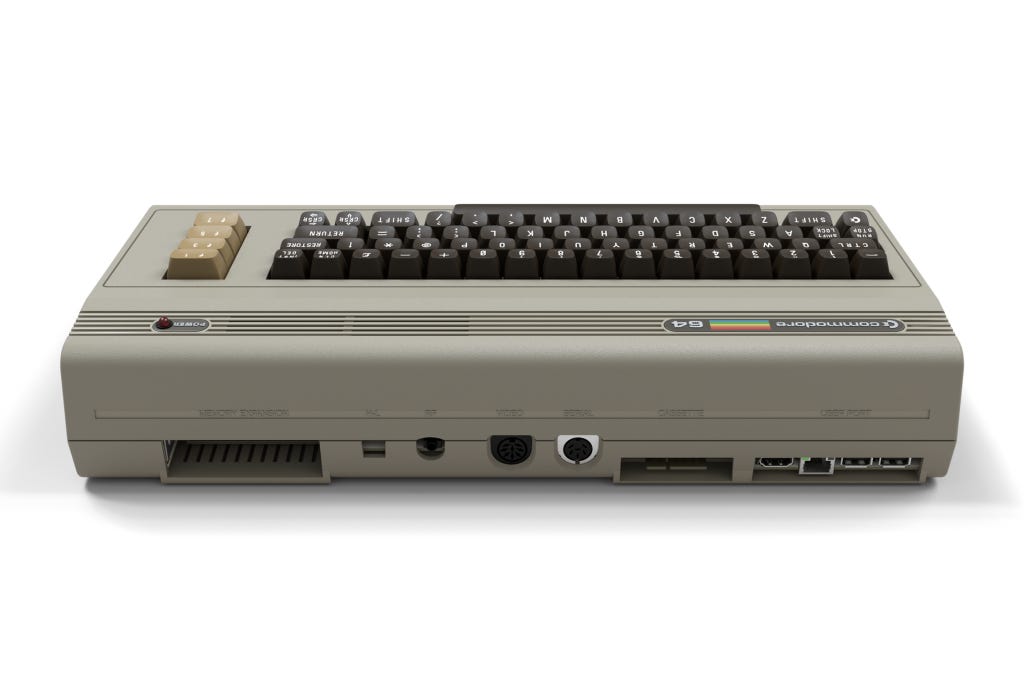
The Commodore 64 Ultimate BASIC Beige… with a few ports that weren’t found on the original, like the HDMI, Ethernet, and USB ports on the right side of this photo. Image from Commodore’s website.
If you’re a real retro geek, you can also consider the $349.99 “Starlight” model with a translucent LED-lit case or the $499.99 “Founders” edition with “real gold” features!
Although I do enjoy trips down memory lane — hell, that’s why I started LifeBits — I don’t really want to spend money on retro tech, even if it has been updated to some level of modernity. Instead, I choose to spend my retirement nest egg on pocket Linux computers!
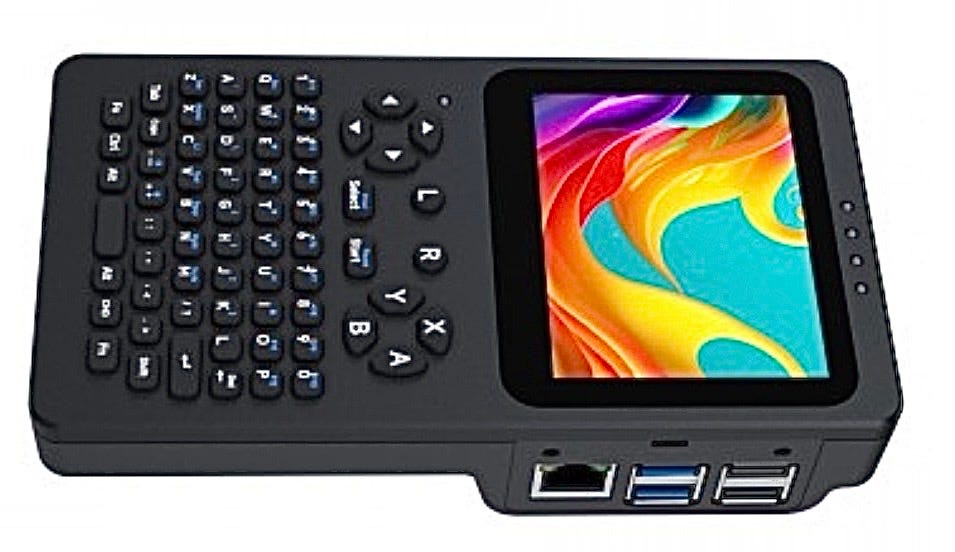
Coming soon to the house of an unrepentant tech nerd near you! Image via WaveShare
Yay, you just returned from traveling back in time with me to my life in the 1980s! I hoped you liked this and will consider reading other LifeBits articles. Not a subscriber? Sign up for free using the Subscribe button:
I also want to get your opinion on a possible project. If you have read my BBS article, you might wonder what it was like to interact “online” in those days. Well, I’m considering setting up a BBS that will only be accessible via terminal apps, but will give you the full ASCII experience that we knew and loved back in the day. To judge interest in this project, here’s a quick poll:
Until next time, keep your C64 program cassettes away from strong magnets!